Diversity America
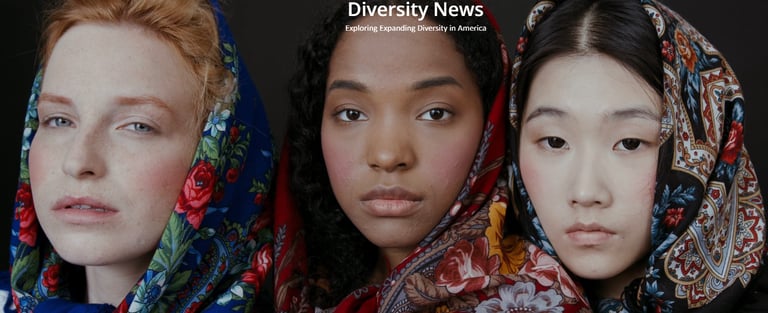
An ever-increasing diverse American population
DiversityNews.Blog
2/23/20261 min read


The United States is experiencing historic, rapid increases in racial and ethnic diversity, with the white population share declining to roughly 57.5%–59.3% by 2024-2025. Driven by growth in Hispanic (approx. 20%), Asian (6.7%), and multiracial populations, the country is becoming less white and more racially diverse, especially among the youth population.
Brookings +2
Key statistics regarding US diversity:
Population Shift: The U.S. population is becoming more diverse, with the white population share falling from 59.5% to 57.5% between 2020 and 2024.
Ethnic/Racial Breakdown (Approx. 2024-2025):
White (Non-Hispanic):
~57.5%
Hispanic: ~20%
Black: ~12.6%
Asian: ~6.7%
Two or more races: ~2.5%
Regional Diversity: Hawaii and California are the most diverse states based on 2023 data. States with the lowest diversity include Maine, Vermont, and West Virginia.
Immigration: As of 2023, 13.8% of U.S. residents were born outside the country.
Youth vs. Adults: The population under 18 is more diverse than the adult population, with a higher Diversity Index score.
Census.gov +3
Cultural and Linguistic Diversity
Languages: Data USA notes that, besides English, Spanish is the most commonly spoken language, with over 42 million households, followed by Chinese (including Mandarin and Cantonese) and Tagalog.
Religion: The U.S. is home to a wide variety of religious beliefs, including Christianity, Judaism, Islam, Hinduism, Buddhism, and others.
Data USA +4
Diversity in Other Contexts
Workplace: Organizations are focusing on four types of diversity: internal, external, organizational, and worldview.
Immigration Policy: The U.S. Department of State offers a Diversity Visa Program, allowing individuals from countries with low immigration rates to apply for a, visa.
Explore diverse perspectives on American culture.
contact@diversitynews.blog
© 2026. DiversityNews.Blog - All rights reserved.