Eartha Kitt vs. LBJ & Ladybird Johnson
LBJ was a dual-purpose racist
DiversityNews.Blog
4/28/20267 min read
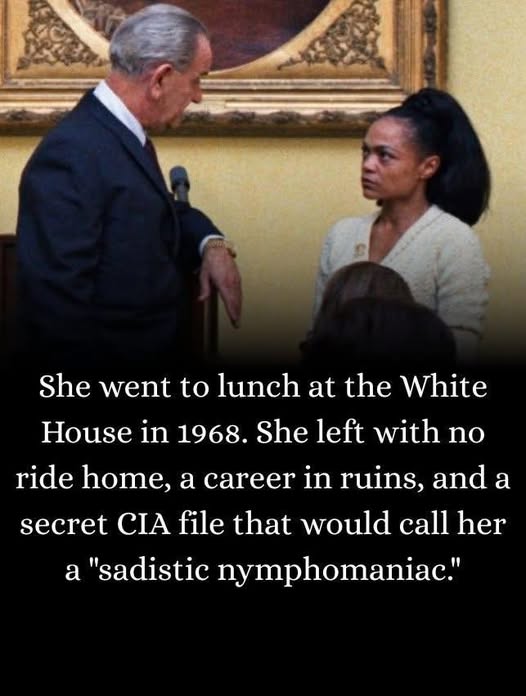
On January 18, 1968, Eartha Kitt put on gloves and stockings, left her hotel in Washington, D.C., and rode in a limousine to 1600 Pennsylvania Avenue.
She had been invited by First Lady Lady Bird Johnson to attend a "Women Doers' Luncheon" on the subject of juvenile delinquency — fifty prominent women gathered to discuss why American youth were, in the polite language of the day, in trouble.
Kitt had been invited because of her work with a D.C. youth nonprofit called Rebels with a Cause.
She was 40 years old, one of the most famous entertainers in the world, and about to detonate her American career with a single honest answer.
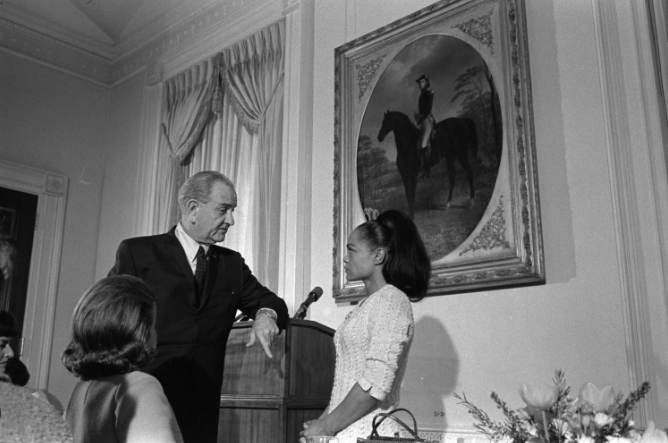
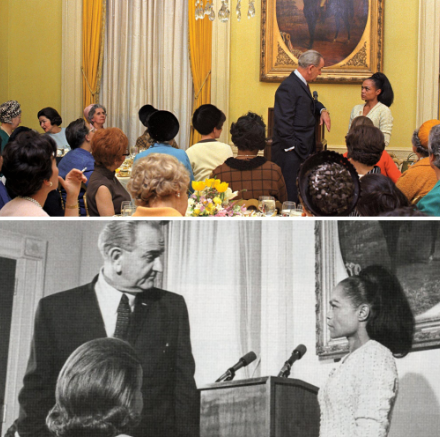
President Johnson made a surprise appearance early in the luncheon.
He spoke about crime, and how prevention began at home with mothers.
Kitt raised her hand. What, she asked him, about parents who had to work?
The President gave a short reply about Social Security funding for daycare and hurried out of the room.
Kitt kept her hand up through the rest of the luncheon.
When Lady Bird Johnson could no longer politely skip over her, Kitt was finally called on. She stood up.
And what followed, according to reporters in the room, was about three minutes of the most honest thing said in the White House that year.
"You send the best of this country off to be shot and maimed," Kitt told the First Lady and the room.
"They rebel in the street. They will take pot...and they will get high. They don't want to go to school because they're going to be snatched off from their mothers to be shot in Vietnam."
She turned to Lady Bird — a mother of daughters — and said that if she couldn't understand what it meant to send a child to die in a war, she should try.
The room froze. Press reports at the time said Lady Bird had tears in her eyes, though historians now think that detail was dramatized.
Lady Bird responded firmly: "Because there is a war on, that still doesn't give us a free ticket not to try to work for better things."
Kitt was not invited to stay. When she left the White House, no car had been ordered to take her back to her hotel. She hailed a cab.
The punishment was almost immediate.
Nightclub bookings vanished.
Television appearances were canceled.
Club owners told her, sorry, "you're a problem."
She didn't know why until six years later, when a 1975 New York Times investigation by journalist Seymour Hersh revealed that the Central Intelligence Agency had opened a dossier on her after the luncheon.
The file reportedly called her "a sadistic nymphomaniac," speculated about her sex life, and according to Kitt's memoir, carried a note at the bottom: "specifically requested by Lady Bird and President Johnson."
Radio stations in Hanoi had rebroadcast her remarks.
The White House never forgave her.
For nearly a decade she barely worked in America. So she left.
She performed to packed theaters in London, Paris, Berlin, and Stockholm.
She sang in five languages. Audiences in Europe loved her in ways her own country had decided to forbid.
She later said, with characteristic dryness: "If you tell the truth — in a country that says you're entitled to tell the truth — you get your face slapped and you get put out of work."
In 1978, President Jimmy Carter invited her back to the White House.
She returned to Broadway the same year and received a Tony nomination.
The country that had tried to unperson her eventually rediscovered her — in films, in cabaret, as the voice of Yzma in The Emperor's New Groove, as the woman singing "Santa Baby" every December.
She kept performing, brilliantly, until weeks before her death in 2008 on Christmas Day.
She never apologized for the White House luncheon. Not once.
Would you have said what she said, knowing what it would cost?
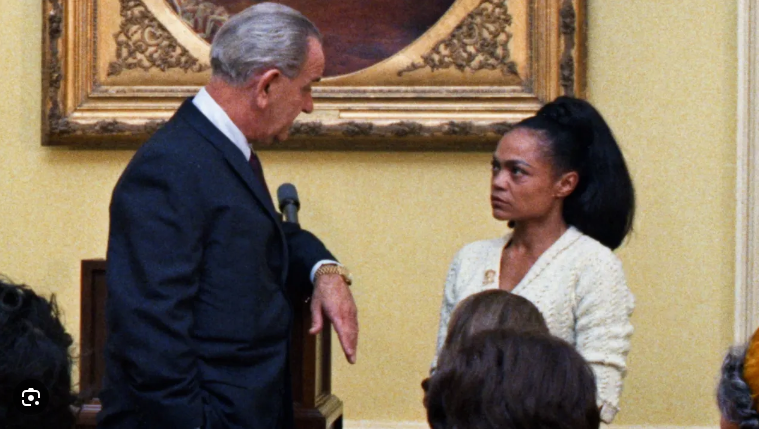
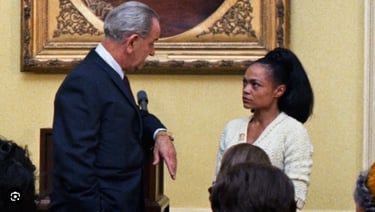
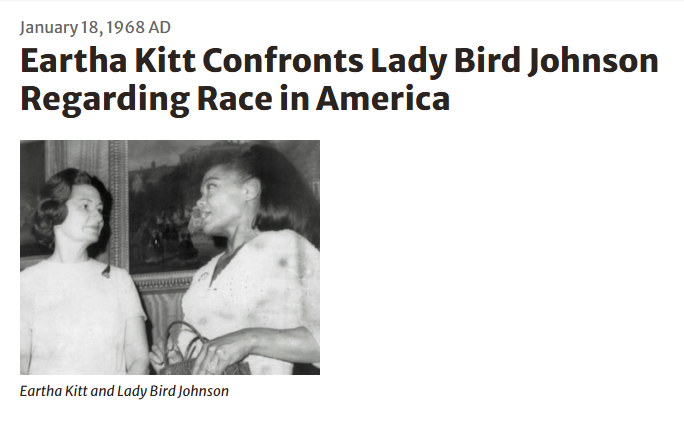
Eartha Kitt Confronts Lady Bird Johnson Regarding Race in America
*On this date in 1968, Eartha Kitt addressed racism in America at a White House luncheon hosted by Lady Bird Johnson.
In early 1968, the First Lady hosted the first “Women Doer” luncheons to gather women leaders from around the country to address various growing or endemic problems.
The first was titled “What Citizens Can Do to Help Ensure Safe Streets.”
In her trademark southern accent, Mrs. Johnson told the women invited to the event that it was a “grim subject for a pleasant meeting like this.”
The reaction to Mrs. Johnson and the three women speakers who followed seemed only to make Kitt visibly nervous and agitated guests all the more upset.
Waving her hand so she could speak, Mrs. Johnson told her, “Eartha, you will be able to speak.”
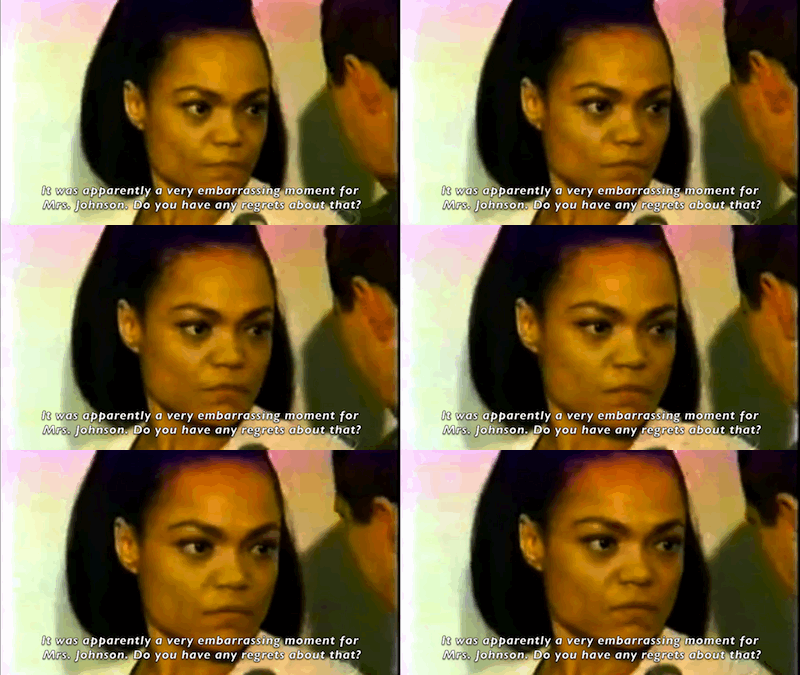
When she did, the actress rose and unwound a monologue aimed at the First Lady and criticizing the President’s Vietnam War policy:
“…I have lived in the gutters. I know the youth of America today are not rebelling and are not hippies for no reason at all. We don’t have what we have on Sunset Boulevard for no reason. They are rebelling against something. There are so many things burning the people of this country, particularly mothers. They feel they are going to raise sons – and I know what it’s like, and you have children of your own, Mrs. Johnson – we raise children and send them to war. I am sorry, Mrs. Johnson if I am going to offend the President or you, but I am here to say the youth do not want to go to school because when they come out, they will be snatched from the mother and sent off to Vietnam. The boys of this country are doing everything they possibly can to avoid being drafted…They feel that ‘if I have any kind of life at all, I am going to enjoy it as best I can because I may not be here tomorrow…’If I get thrown in jail, I don’t stand a chance of going off and being shot in Vietnam.’ They will smoke a joint and get high in order to avoid whatever it is to get shot at. You send the best of this country off to be shot and maimed. No wonder the kids rebel and take pot. In case you don’t know what that is, it is marijuana.”
Lady Bird Johnson was reported to have tears in her eyes, shocked at this first confrontation of a First Lady in the White House.
She had, however, already encountered anti-war protests at Yale University and Williams College when she came to speak there.
She gathered her thoughts and addressed Eartha Kitt:
“Because there is a war on – and I pray that there will be a just and honorable peace – that sty ill does not give us a free ticket not to try and work on bettering the things in our country that we can better. I am sorry I cannot understand as much as I should because I have not lived in the background as you have. Nor can I speak as passionately or as well as you can. But I think we must keep our eyes and, our hearts, and our energies focused on constructive aims. Violence will not help.”
Alerted to what was happening, President Johnson entered the luncheon in the Family Dining Room.
Kitt asked him in a rambling manner about when he would end the war and why so many young men were being killed.
It was an elliptical question, and she got an elliptical answer.
The incident captured the next day’s headlines across the country.

LBJ: "Tell you what, you can't have a poll tax.
They can say you can't have a gas tax or a cigarette tax, anything else.
The federal government's telling the states, uh, uh, pretty tough what, what their business is.
Now, you can say that they can't discriminate, but I've got to prove that it discriminates.
Now, I can't prove it in Texas.
There are more ni$$ers voting there now than white folks.
There are more of them buying poll taxes now than white folks - higher percentage of them.
And I can't show that, uh, that the literacy test is, is that discriminate against 'cause they haven't got any.
They got no test at all.
Just by God, anybody that can get up and pay a dollar and six bits can vote."
******************************************
Lyndon Johnson was a civil rights hero; but also a racist.
He happened to be the greatest champion of racial equality to occupy the White House since Lincoln.
In Flawed Giant, Johnson biographer Robert Dallek writes that Johnson explained his decision to nominate Thurgood Marshall to the Supreme Court rather than a less famous black judge by saying, "when I appoint a nigger to the bench, I want everybody to know he's a nigger."
According to Caro, Robert Parker, Johnson's sometime chauffer, described in his memoir Capitol Hill in Black and White a moment when Johnson asked Parker whether he'd prefer to be referred to by his name rather than "boy," "nigger" or "chief."
When Parker said he would, Johnson grew angry and said, "As long as you are black, and you’re gonna be black till the day you die, no one’s gonna call you by your goddamn name. So no matter what you are called, nigger, you just let it roll off your back like water, and you’ll make it. Just pretend you’re a goddamn piece of furniture."
https://www.msnbc.com/msnbc/lyndon-johnson-civil-rights-racism-msna305591
LBJ Using the N-Word: "just by God anybody that can get up and pay a dollar and six bits can vote."
Explore diverse perspectives on American culture.
contact@diversitynews.blog
© 2026. DiversityNews.Blog - All rights reserved.